
XRP ETF Inflows Rise — Traders Still Skeptical Amid Low Conviction
 By John Nada·Jun 11, 2026·4 min read
XRP holds over $1.10 as ETF inflows grow, but traders remain wary with open interest low.
XRP's journey above $1.10 in the face of rising ETF inflows mirrors a tale of resurgence met with skepticism. Institutional investments pump up the volume, with CoinDesk reporting $6.75 million more flowing into XRP-linked products, yet futures traders linger cautiously around key support levels.
According to the latest data, XRP's price stood resilient at $1.1141, making a late-session leap from $1.11 buoyed by heavy trading volume. But this recovery appears tentative, a mere 1% gain against a larger crypto market rebounding more vigorously. While institutional dollars move in, demonstrated by roughly $1.44 billion in cumulative ETF inflows, the broader market seems to be outpacing XRP's momentum.
This influx of capital into XRP-linked investment products signifies a growing institutional interest in the asset, yet it contrasts sharply with the sentiment observed in the futures market. The futures activity surged to approximately $5 billion during the session, indicating renewed interest. However, open interest hovers at cycle lows, suggesting a lack of substantial long-term commitment from traders. This duality—active repositioning against a backdrop of cautious exposure—reflects an industry still gauging its next move rather than diving in headlong.
Futures markets often serve as a barometer for trader sentiment and longer-term market expectations. The current scenario, where high trading volume does not translate into increased open interest, suggests that many traders are opting to reduce risk. This behavior is typical in environments where market participants are uncertain about future price movements or broader economic conditions. The cautious stance among traders is in stark contrast to the optimism shown by institutional investors, who continue to pour money into XRP-based ETFs.
Technical metrics compound this caution. XRP lags behind its 50-day, 100-day, and 200-day moving averages, a sign that sellers might yet have the upper hand. Traders eye the $1.10 line as a critical support threshold, with $1.12-$1.13 as the immediate resistance zone. A break past $1.1352 might shift sentiment, but a slip below $1.05 could renew discussions on testing the psychological $1.00 mark.
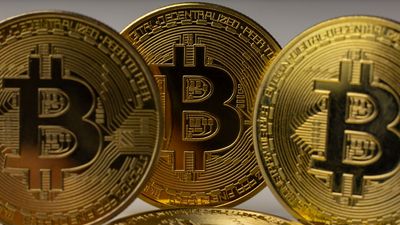
Raydium Hit by $1.34M Exploit — Legacy Code at Fault
Raydium's legacy AMM pools exploited for $1.
The technical indicators are critical for understanding market sentiment. The moving averages, often used by traders to identify trends, show that XRP is in a downtrend. This suggests that, despite the recent price increase, the overall sentiment remains bearish. The $1.10 support level is crucial for maintaining the current stabilization attempt. If this level holds, it could provide a foundation for future price increases. However, failure to maintain this support might lead to further declines, possibly revisiting the psychological $1.00 level.
XRP's performance is also affected by broader market trends. The recent bullish momentum in the crypto market has largely been driven by bitcoin, which has recovered more aggressively than XRP. This divergence in performance highlights the challenges XRP faces in gaining traction and sustaining upward momentum. The broader market's strength underscores XRP's relative weakness, as it has underperformed major crypto benchmarks by nearly two percentage points.
The XRP Ledger's upcoming version 3.2.0 upgrade, scheduled for June 15, is another factor that could influence market dynamics. This upgrade is expected to reduce server memory requirements by around 40% while rebranding the core software from "rippled" to "xrpld." Such technical improvements could enhance the efficiency and appeal of the XRP network, potentially attracting more users and investors.
The XRP Ledger upgrade represents a significant development in the token's ecosystem. By optimizing performance and reducing resource consumption, the upgrade could improve the network's scalability and reliability. This, in turn, might bolster investor confidence and drive further institutional interest. However, market participants will be closely watching how these changes impact the network's overall performance and adoption.
The crypto market continues to evolve rapidly, and XRP's position within it is subject to various influences, including technological advancements, market sentiment, and broader economic conditions. As traders and investors navigate these complexities, the interplay between institutional interest and futures market behavior will remain a key focus for those seeking to understand the potential for XRP's recovery.