
Tesla Faces Major Stock Drop Amid Disappointing Q1 Deliveries Report
 By John Nada·Apr 3, 2026·6 min read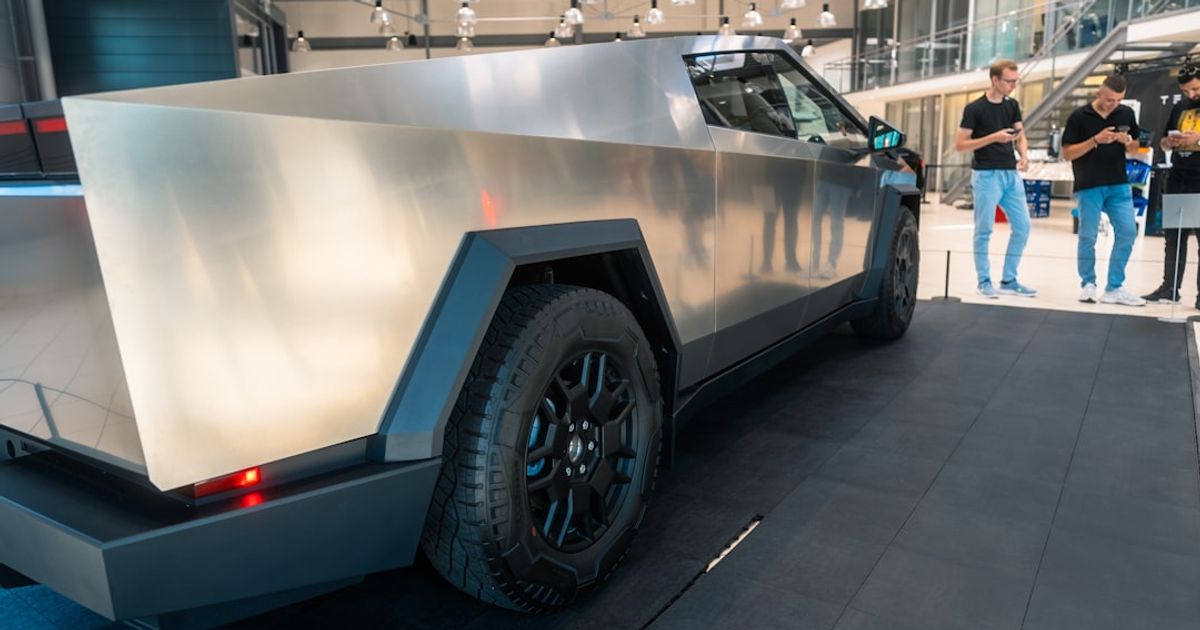
Tesla's stock fell sharply due to disappointing Q1 delivery numbers, signaling potential challenges ahead for the EV market and the company itself.
Tesla shares slid more than 5% on Thursday, marking their steepest decline of the year, following the release of the company’s deliveries and production report for the first quarter. The figures showcased a drop from the prior period, despite mild growth from a year earlier. Specifically, Tesla reported total vehicle deliveries of 358,023 units, which fell short of analysts’ expectations, as many had anticipated closer to 370,000 deliveries. The production report indicated 408,386 vehicles manufactured, but these numbers did little to alleviate market concerns.
Despite showing a 6% increase from the previous year when Tesla reported 336,681 deliveries, the first quarter of 2025 marked a troubling decline of 13% compared to the first quarter of 2024. This downward trend raises red flags for investors, particularly as Tesla's total deliveries for 2025 have decreased to 1.64 million from 1.79 million in 2024. The stock’s drop on Thursday follows a broader pattern, with Tesla shares down 20% in 2026 alone.
The two models that represent the bulk of Tesla's sales, the entry-level Model 3 sedan and the popular Model Y SUVs, accounted for a significant 341,893 units delivered in the quarter. While deliveries are the closest approximation of sales reported by Tesla, they remain somewhat ambiguous in the company’s shareholder communications. This vagueness in reporting can lead to uncertainty about the actual sales performance and the company's future prospects.
CEO Elon Musk has been refocusing Tesla's strategy towards producing a fully autonomous driverless Cybercab and Optimus humanoid robots. However, these ambitious projects have yet to materialize into significant revenue streams for the company, which continues to rely heavily on auto sales for its income. In January, Tesla announced it would end production of its flagship Model S and X vehicles, reallocating the factory lines in Fremont, California, to focus on building Optimus robots, indicating a strategic pivot away from its traditional high-end offerings.
The discontinuation of the Model S and X is particularly noteworthy, as these vehicles have been iconic for Tesla since its early days. Musk indicated via a post on his social media platform, X, that the orders for the S and X have “come to an end,” although some units remain in inventory. He expressed nostalgia for these models, stating, “We will have an official ceremony to mark the ending of an era. I love those cars.” This sentiment reflects the emotional attachment many Tesla enthusiasts share towards these flagship vehicles, which have long symbolized the brand’s innovative spirit.
Despite the introduction of new products like the angular Cybertruck, which began deliveries in late 2023, this model has not yet achieved mainstream success. Looking ahead, Tesla is gearing up to ramp up deliveries of its fully electric Semi in 2026, a class 8 truck boasting a promised range of 500 miles. The success of the Semi, like that of the Cybertruck, remains to be seen amidst the competitive landscape of electric vehicles.
In the context of Tesla's broader business, the energy division has also faced challenges. The company reported that it deployed 8.8 gigawatt hours of battery energy storage systems in the first quarter, a significant drop from the record of 14.2 gigawatt hours deployed in the fourth quarter of 2025. This decline raises questions about the pace of growth in Tesla's energy solutions, as Q1 of 2025 had seen deployments of 10.4 GWh. Tesla’s energy products include its Powerwall backup batteries for homes, alongside larger Megapack and Megablock systems utilized in data centers and utilities. The fluctuation in deployment numbers may indicate potential supply chain issues or shifts in customer demand.

Analysts from William Blair, led by equity analyst Jed Dorsheimer, expressed their lack of surprise regarding Tesla’s automotive numbers, attributing the company’s performance to the pressures facing global EV demand outside of China. The analysts noted that Tesla appears to be prioritizing its pursuit of a fully autonomous future over its current electric vehicle business. This strategic shift could have far-reaching implications for the company’s revenue model and market positioning.
Dorsheimer also articulated concerns about Tesla’s energy business, stating that the decline in deployments is perplexing given the nature of that business, which can be inconsistent based on customer grid hook-up timings. However, the extent of the drop-off in Q1 was seen as particularly alarming and raised questions about what had transpired with supply within that quarter.
Tesla’s stock has been on a downward trajectory, having dropped 15% in the first quarter of 2026 alone. This trend follows a similar pattern observed in the first quarters of 2024 and 2025, where the stock experienced declines before rebounding in subsequent quarters. The sustained downturn can be attributed to a combination of factors, including increased competition across the global EV market and a consumer backlash against Musk due to his political endorsements. Musk’s financial support for controversial political figures and movements in the U.S. and abroad has led to a polarized perception of the brand among consumers.
The broader U.S. EV market has also faced challenges, particularly following the termination of a $7,500 federal incentive for the purchase of new electric vehicles in September, which had previously contributed to bolstering sales. The competitive landscape for electric vehicles has become increasingly crowded, with numerous automakers entering the market and intensifying the competition for Tesla.
Interestingly, as tensions rise globally, particularly following the U.S. and Israel launching strikes against Iran, there has been an uptick in sales of used electric vehicles. This shift may be attributed to escalating oil prices, which have surged due to the conflict, prompting consumers to consider alternative fuel vehicles. The complex interplay of geopolitical events and economic factors continues to shape consumer behavior and preferences in the automotive market.
As Tesla prepares to report its first-quarter earnings on April 22, market observers are keenly focused on the company’s automotive gross margins and any potential supply chain disruptions that may have impacted deliveries. Investors and analysts alike will be looking for insights into how Tesla plans to navigate these challenges and maintain its market leadership amidst evolving consumer preferences and competitive pressures.
The recent stock drop could signify deeper issues within the electric vehicle market as it continues to adapt to these shifting dynamics. Tesla's ability to address these challenges effectively will be crucial in determining its future trajectory in the industry. The outcomes of the upcoming earnings report may provide a clearer picture of the company's operational health and strategic direction, shedding light on whether Tesla can regain its momentum in a rapidly changing market landscape.