
Rising Government Debt: A Bullish Signal for Gold and Silver Markets
 By John Nada·Feb 25, 2026·8 min read
As government debt surges globally, the implications for gold and silver markets become increasingly significant. Understanding this relationship is vital for investors.
The U.S. national debt has crossed $36 trillion, highlighting a crucial financial reality that impacts investors' strategies in precious metals. As government debt rises globally, the implications for gold and silver become increasingly significant. Understanding the nuances of this relationship is essential for making informed investment decisions.
Government debt has become one of the defining financial realities of the modern era. The U.S. national debt recently surpassed $36 trillion, and similar fiscal pressures are mounting across major economies worldwide. For investors, this raises an urgent question: what does rising government debt actually mean for the price and performance of gold and silver? The short answer is that government debt tends to be bullish for both metals—but the relationship is more nuanced than a simple cause-and-effect. Understanding the mechanisms at work can help you make smarter decisions about whether, when, and how to add precious metals to your portfolio.
The connection between government debt and precious metals largely revolves around the concept of confidence. When investors trust a government's fiscal discipline and currency stability, traditional assets like bonds and equities tend to perform well. However, as confidence wanes, capital often flows toward gold and silver, which serve as safe-haven assets outside the financial system. Unlike currencies or government bonds, these metals are not someone else's liability and maintain intrinsic value. This distinction becomes significant during periods of rising sovereign debt—today, sovereign debt levels globally are at historic highs.
Rising government debt can lead to a tightening economic environment when it outpaces economic growth. Governments typically respond by raising taxes, cutting spending, defaulting, or inflating debt away. Historically, inflation emerges as the favored approach. Monetary expansion increases the money supply, eroding purchasing power over time. The currency may continue to function, but each unit buys less. Notably, gold's supply cannot be expanded through policy decisions, which makes it an attractive asset as fiat currency supply expands more rapidly than gold supply.
Historical trends illustrate how government debt influences gold and silver performance. The 1970s serve as a striking example: after the U.S. abandoned the gold standard in 1971, rapid government spending led to inflation and a significant rise in gold prices. Gold rose from $35 per ounce at the start of the decade to over $800 by 1980. What looked like a speculative surge was largely a repricing of gold relative to an expanding money supply. Similarly, during the pandemic in 2020, governments injected trillions into the financial system, resulting in U.S. federal debt surging by over $4 trillion in a single year. This monetary expansion contributed to a 25.1% increase in gold prices and nearly 47.9% for silver in 2020.
Investors often monitor the debt-to-GDP ratio to assess fiscal sustainability. When this ratio exceeds 90-100%, it typically signifies slower growth and heightened fiscal strain. The U.S. is currently over 120% debt-to-GDP, a situation mirrored globally, where total debt has risen to over 320% of GDP—nearly double where it stood at the turn of the century. In such high-debt environments, outright government defaults are rare; instead, governments resort to financial repression, keeping interest rates below inflation to gradually diminish the real value of debt.
In periods of negative real yields, gold's appeal as a store of value grows. Real yield reflects bond returns after inflation, and when these yields are negative, bondholders lose purchasing power. Consequently, capital often seeks alternatives like gold, which does not pay interest but preserves value. Over the past decade, real yields have frequently been near zero or negative, and gold has performed strongly during those stretches. The likelihood that debt expansion will lead to sustained negative real yields structurally improves gold's attractiveness as a hedge against inflation.
Debt also impacts gold through investor confidence. When doubts arise about a government's fiscal discipline or a currency's stability, investors flock to assets devoid of counterparty risk. Gold stands out here; it’s not issued by any government and carries no default risk. This characteristic has led central banks to accumulate gold in recent years as they diversify reserves away from traditional bond systems. Such actions signal a growing concern regarding sovereign debt levels, underscoring the idea that when governments struggle with debt, confidence in their currencies and financial systems can diminish, leading to increased demand for gold.
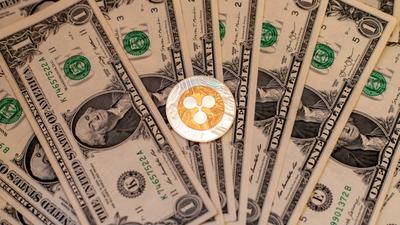
XRP Tumbles Below $1.30 — Sellers Break Key Support Level
XRP sinks below $1.
Silver, known for its dual role, often mirrors gold's performance during monetary stress but with greater volatility. It benefits not just from its monetary hedge properties during inflationary periods but also from industrial demand in sectors like solar energy, electronics, and electric vehicles. Increased government spending, particularly in energy and technology, could structurally boost silver demand, offering investors amplified exposure to precious metals. Given silver's historical tendency to outperform during market rallies, its performance during inflationary pressures could be even more pronounced.
A pertinent question arises: have gold prices already accounted for the risks associated with rising government debt? Historical patterns indicate that major bull markets in gold correlate with negative real rates, increasing debt-to-GDP ratios, and weakening currency confidence. While current conditions reflect these factors, they do not guarantee immediate price increases. However, the macroeconomic backdrop suggests that the case for precious metals remains compelling and not fully priced in.
While rising government debt doesn’t guarantee an automatic increase in gold prices, it heightens the probability of conditions historically favorable to precious metals. These include monetary expansion, persistent inflation, currency depreciation, and declining real yields. For long-term investors concerned about purchasing power, the structural position of gold and silver as assets outside the financial system warrants consideration, irrespective of current price movements. Investors should keep a close watch on these dynamics as they unfold in a complex financial landscape.
The Financial System Isn’t Safer — And You Know It. As risks mount, it is evident why gold and silver are projected to keep shining in 2026 and beyond. The implications of rising government debt extend beyond immediate price fluctuations; they signal a larger trend in financial markets and investor psychology. The data illustrating the correlation between increasing debt and precious metals performance points to a broader recognition among investors of the potential risks of holding traditional assets amid fiscal uncertainty.
The future of precious metals is also tied to the evolving economic landscape. As governments continue to navigate the challenges posed by high debt levels, the strategies employed—whether through monetary policy, fiscal stimulus, or other means—will significantly influence market sentiment. Investors should remain vigilant, as the interconnections between government debt, inflation, and the performance of gold and silver will likely shape the investment landscape for years to come.
Ultimately, for investors who have long been concerned about purchasing power erosion, gold and silver represent viable hedges against systemic financial risks. The structural position of these assets outside traditional financial systems offers a unique advantage in uncertain times. As government debt continues to rise, the appeal of gold and silver as safe-haven assets may only strengthen, making them critical components of a diversified investment portfolio.
Investing in Physical Metals Made Easy. The demand for precious metals is expected to continue growing, especially as central banks diversify their reserves, signaling a shift in how governments view their fiscal responsibilities. As the global economy adjusts to new realities, the role of gold and silver may evolve, further enhancing their status as essential investments.
People Also Ask: Does rising government debt increase gold prices? Yes. When government debt rises, it typically triggers monetary expansion and inflation, which erodes the purchasing power of paper currency. Investors respond by moving capital into gold—a finite, tangible asset that cannot be devalued—driving its price higher. Why are gold and silver considered safe-haven assets during debt crises? Gold and silver carry no counterparty risk—they are not tied to any government’s promise or ability to repay. When confidence in sovereign debt weakens and bond yields turn negative in real terms, investors rotate into precious metals as a reliable store of value outside the financial system. How does inflation caused by government borrowing affect silver prices? Government borrowing fuels monetary expansion, which causes inflation. Silver benefits from this environment as a monetary hedge, much like gold. Silver often amplifies gold’s gains during inflationary periods—in 2020, for example, it surged 47.9% compared to gold’s 25.1% as governments unleashed unprecedented stimulus spending. What historical trends show the link between national debt and precious metals? Historically, periods of heavy deficit spending and fiscal stress have coincided with strong precious metals performance. Gold rose dramatically through the debt-fueled inflation of the 1970s, and both gold and silver posted significant gains in 2016, 2019, 2020, and 2023—all years marked by expanding government deficits and economic uncertainty. What percentage of my portfolio should be in gold or silver given high debt levels? Most financial guidelines suggest allocating 5–15% of a portfolio to precious metals, depending on risk tolerance. Conservative investors typically favor 8–10% in gold with 2–3% in silver. Aggressive investors may hold 3–5% in gold and 7–10% in silver to capture silver’s higher growth potential during periods of fiscal and economic stress. This strategic allocation reflects an understanding of the unique attributes of each metal in navigating uncertain economic conditions.