Gold-Silver Ratio Expansion Signals Market Dynamics Amid Supply Deficits
 By John Nada·May 4, 2026·7 min read
The recent expansion of the gold-silver ratio to 62.05:1 signals short-term market dynamics, while the structural case for silver remains robust amid ongoing supply deficits.
The gold-silver ratio has expanded to 62.05:1 as silver underperformed gold, falling approximately 7% since April 22, while gold's decline was around 4%. This ratio shift signals a short-term cyclical response rather than a change in silver's structural narrative, which remains bolstered by ongoing supply deficits and robust industrial demand.
Historically, a higher gold-silver ratio indicates silver's weakness relative to gold. The ratio has fluctuated widely since 2000, often reflecting market stresses and shifts in investor sentiment. Currently, the ratio's position at 62:1 sits in the lower middle of its modern range, indicating that silver is neither significantly undervalued nor overvalued, but the recent movement underscores a critical divergence between market pricing and supply fundamentals.
Silver's underperformance can be attributed to its dual demand nature. Approximately 60% of silver's demand stems from industrial applications, which typically thrive in a strong economy. Recent geopolitical tensions have led to a reduction in the safe-haven premium for both metals, compelling traders to reassess their positions. As energy supply disruptions ease, fears of inflation may push investors toward a more cautious stance, leading to greater selling pressure on silver.
The recent market dynamics illustrate the complexities within the silver market. Two weeks ago, silver was performing in line with expectations from the sound money community, with the gold-silver ratio compressing and silver outperforming gold as both metals retreated from the high prices driven by the Iran conflict. However, since then, silver has experienced a more pronounced decline, prompting a shift in the ratio back to 62.05:1 as of May 5, 2026. This sharp movement does not signify a weakening of silver's fundamental story, but rather reflects temporary market positioning and sentiment.
What is particularly striking about the current gold-silver ratio of 62:1 is its historical context. The ratio measures how many ounces of silver it takes to purchase one ounce of gold. A higher ratio indicates that silver is weaker relative to gold, whereas a lower ratio suggests the opposite. Over the long term, the ratio was fixed at roughly 15:1 during the bimetallic monetary standards era, notably under the U.S. Coinage Act of 1792. This fixed ratio was essentially aligned with the geological abundance of silver compared to gold, as estimated by the U.S. Geological Survey, which indicates that there is approximately 17.5 times more silver than gold in the earth’s crust.
Since the year 2000, the gold-silver ratio has exhibited considerable volatility, oscillating between 50:1 and 90:1. Notably, during periods of crisis, the ratio has spiked dramatically, reaching 88:1 in late 2024 and even 125:1 during the COVID-19 liquidity panic in March 2020. These extreme movements often serve as critical signals for investors looking to identify when silver may be historically undervalued relative to gold. Today’s ratio of 62:1 sits comfortably within the lower-middle of this modern range, indicating that while silver is not alarmingly undervalued, the recent directional movement is a pivotal factor to consider.
The dual nature of silver demand—monetary versus industrial—adds layers of complexity to its market performance. Roughly 60% of silver's demand is driven by industrial applications, including solar panels, electric vehicles, 5G infrastructure, and semiconductors. This industrial demand typically propels silver's performance when the economy is robust. Conversely, during periods of economic uncertainty, silver tends to underperform as investors gravitate towards gold as a safe haven. The current geopolitical climate, particularly the potential wind-down of the Iran conflict, has contributed to a diminished safe-haven premium for both metals, with silver facing additional pressure from its industrial component, especially if energy supply disruptions are alleviated.
Recent price actions provide further insight into the current market conditions. Silver reached an all-time high of $121.62 per ounce on January 29, 2026, fueled by an unprecedented confluence of monetary and industrial demand. Yet, it has since retraced roughly 39%, while gold has demonstrated more resilience during the same period. The expansion of the gold-silver ratio from near multi-year lows back to the middle of its modern range illustrates the shifting dynamics at play.
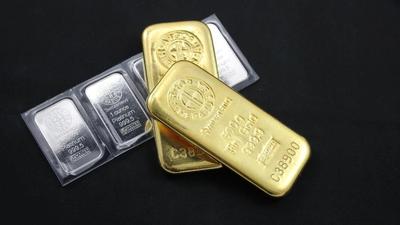
Gold's Forecast Tweaked — HSBC Slashes Average but Holds Year-End Target
HSBC cuts 2026's average gold forecast but holds year-end target.
Despite the short-term fluctuations in the gold-silver ratio, the structural case for silver remains robust. According to the Silver Institute’s World Silver Survey 2026, the market is poised for its sixth consecutive annual supply deficit, driven by insufficient production to meet escalating demand. In the past few years, approximately 762 million ounces have been drawn down from above-ground stockpiles, highlighting the increasing strain on silver supply.
Additionally, recent data indicates that China’s silver imports reached an all-time record in March 2026, propelled by two simultaneous factors: retail investors seeking physical silver bars as a cost-effective alternative to gold and solar manufacturers accelerating their procurement in anticipation of the removal of China's April 1 export tax rebate. This surge in imports underscores the strong demand dynamic within the silver market, reinforcing the idea that the supply constraints are not merely a temporary phase.
Regulatory changes under Basel III are expected to further tighten the supply of silver. These changes are gradually drawing bank capital away from paper silver markets, which have historically exerted downward pressure on spot prices. Banks have been quietly reducing their exposure to paper precious metals as they prepare for the impending rules, which could lead to a more favorable environment for physical silver moving forward.
For investors, the current gold-silver ratio of 62:1 carries significant implications. First, it is important to note that silver remains well below its all-time high relative to gold. When the ratio last approached 50:1 earlier in 2026, silver was trading in the range of $90 to $95. If the gold-silver ratio were to return to that range while gold remains above $4,500, it could imply silver prices moving between $72 and $90, depending on gold's trajectory.
Second, the widening divergence between supply fundamentals and price action suggests a potential for sharp re-convergence. As history has shown, when the gap between structural realities and market pricing expands, the eventual realignment can be swift and significant. This observation does not serve as a specific price prediction but rather highlights the behavior of commodity markets in response to mismatched positioning and fundamentals.
Lastly, the Federal Reserve's current policy stance, characterized by a frozen approach to interest rates, acts as a hidden tailwind for silver. With the Fed unlikely to raise rates in a weakening labor market and constrained by inflation metrics, the suppression of real yields diminishes the opportunity cost associated with holding non-yielding assets like gold and silver. At a ratio of 62:1, silver possesses greater potential for recovery relative to gold if monetary conditions shift favorably.
The recent expansion of the gold-silver ratio, while initially perceived as bearish, does not reflect a weakening of silver's foundational demand drivers. Instead, it highlights a temporary disconnect between market perceptions and the underlying supply-demand dynamics. For investors holding physical silver, the 62:1 ratio serves as a snapshot of current market conditions, emphasizing the need for vigilance concerning broader economic signals.
As geopolitical tensions ease and supply constraints persist, the trajectory of the gold-silver ratio will be shaped by a complex interplay of monetary policy, industrial demand, and investor sentiment. The disparity between silver's supply fundamentals and its market pricing is a critical indicator for potential re-convergence, suggesting that investors looking to allocate resources toward precious metals should closely monitor these evolving dynamics.