Gold Prices Driven by Geopolitical Tensions and Fed Uncertainty
 By John Nada·Apr 23, 2026·6 min read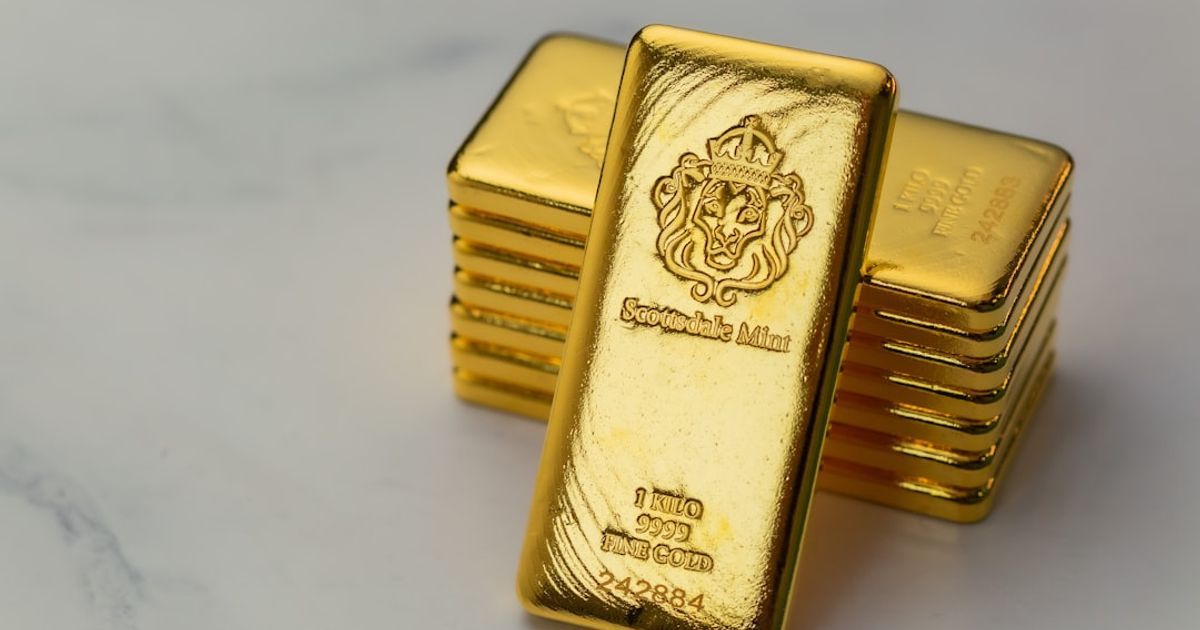
Geopolitical tensions, Fed leadership uncertainty, and central bank buying are reshaping gold prices in 2026. This evolving landscape signals deeper structural changes in the market.
Five converging forces are reshaping gold prices in 2026: a naval standoff in the Strait of Hormuz, uncertainty about Federal Reserve leadership, a weakening dollar, persistent central bank buying, and a challenging policy landscape. These dynamics are not just noise; they are significant factors influencing investor behavior and the broader financial system.
The recent tensions in the Strait of Hormuz highlight the stakes involved. The strait is crucial for global oil transportation, accounting for approximately 20% of consumption. With Iran’s IRGC seizing commercial vessels, the ongoing blockade exacerbates energy market volatility and inflationary pressures. President Trump extended the US-Iran ceasefire on April 22, 2026, but the US naval blockade on Iranian port traffic remains firmly in place, signaling that tensions could escalate further. As a result, every day the blockade continues, energy markets stay on edge, which in turn builds inflationary pressure.
Gold's price has stabilized around $4,750 per ounce, demonstrating resilience during geopolitical strife. This suggests that institutional buyers are active, indicating a structural shift in how gold is perceived, moving beyond mere fear-based buying. Notably, gold peaked near $5,250 per ounce in early March 2026 at the height of hostilities but has only pulled back about 10% since then. Crucially, that price floor has held through every diplomatic failure in between, indicating that gold is not merely a fear trade but an asset with structural buyers who do not need a crisis to sustain demand.
The leadership vacuum at the Federal Reserve adds another layer of complexity to the gold market. Jerome Powell's term as Chair is set to expire soon, with his nominated successor, Kevin Warsh, unable to secure confirmation due to political standoffs. Republican Senator Thom Tillis is withholding his vote until the Department of Justice drops its criminal investigation into Powell, which is tied to a multibillion-dollar Fed headquarters renovation. This instability affects real yields, which are a critical driver of gold prices. The report indicated that the inability to price real yields due to the Fed's leadership uncertainty creates a favorable environment for gold, as investors seek refuge from fluctuating nominal interest rates.
Understanding what drives gold prices also means understanding real yields — nominal interest rates minus inflation expectations. Real yields are the single strongest short-term driver of gold. Currently, real yields are genuinely difficult to price because nobody knows who will be setting them. The timeline for a confirmation vote is uncomfortably tight; the Senate is in recess the week of May 4, meaning the earliest a confirmation vote could realistically occur is the week of May 11. This uncertainty plays into the broader narrative affecting gold prices, acting as a structural tailwind for the precious metal.
Furthermore, gold's relationship with the US dollar appears to be changing. Traditionally, a weaker dollar leads to higher gold prices, as it becomes more affordable for international buyers. Yet, despite the dollar's decline, gold has not risen as expected. As of April 21, 2026, the US dollar index is trading near 98.13, well below pre-war levels. This unusual behavior suggests deep institutional conviction in gold's value, driven by consistent central bank demand rather than short-term currency fluctuations. Central banks and sovereign wealth funds have been accumulating gold consistently, and their demand does not depend on the dollar’s daily direction. They do not exit a position because the dollar recovered 0.4% on a Tuesday.
Ethereum's Energy Intensity Nears Lowest Among PoS Networks
Ethereum's PoS transition slashes energy use, places it low among PoS peers in energy intensity.
As a reflection of this trend, China has been particularly aggressive in its gold accumulation strategy. The nation has increased its gold reserves for 16 consecutive months, lifting its holdings to approximately 2,308 tonnes by February 2026. This move reflects a strategic shift to diversify away from the US dollar amidst concerns over the US government's projected $1.9 trillion deficit for fiscal year 2026. As nations reassess their reserve compositions, seeking stability in physical assets like gold amidst economic uncertainty, it highlights a broader trend in which countries are prioritizing tangible reserves over fiat currency. Diversifying reserves away from the currency of a nation running persistent multi-trillion dollar shortfalls is not merely a geopolitical statement; it is basic balance sheet management.
The evolving regulatory landscape also plays a role in gold’s appeal. The World Gold Council and the London Bullion Market Association are actively lobbying regulators to formally classify gold as a High Quality Liquid Asset under Basel III. Such a move would allow banks to count physical gold toward their short-term liquidity buffers, alongside government bonds and cash. This reclassification has not yet occurred, but the case is strengthening, and the debate is accelerating precisely as central bank accumulation reaches historic levels. Gold has carried a 0% risk weight under Basel capital rules since 1988, the same treatment as cash, but the institutional pressure is growing to go further, which could significantly enhance gold's status among financial institutions.
The Federal Reserve’s current predicament illustrates a broader policy trap. With inflation above the target yet economic growth slowing, the Fed faces tough choices between rate cuts and hikes. Rate cuts risk reigniting inflation, while rate hikes could tip an already fragile economy into recession. This indecision may erode confidence in the Fed's ability to manage monetary policy effectively, driving investors toward gold as a hedge against potential inflation or economic downturns. The prevailing sentiment is that gold doesn’t necessarily need a crisis to thrive; ongoing uncertainty could be sufficient.
Investors should closely monitor these dynamics as they unfold. The interplay of geopolitical tensions, central bank policy, regulatory changes, and structural shifts in demand for gold will significantly influence market sentiment and pricing going forward. This evolving landscape signals deeper structural changes in the market, as gold is becoming more than just a safe haven; it is evolving into a fundamental asset class reflective of broader economic realities.
The combination of a leaderless Federal Reserve, a weakening dollar, and persistent central bank buying paints a complex picture for gold prices. With geopolitical tensions persisting, and the regulatory landscape shifting to potentially favor gold, the precious metal's role in investment portfolios is likely to grow. Investors should not only consider gold as a hedge against immediate crises but as a long-term investment strategy in a world where economic uncertainties are increasingly prevalent.
In the coming months, as the situation in the Strait of Hormuz remains tenuous and the Fed grapples with leadership issues, gold's unique position as a store of value may become even more pronounced. The market's response to these external pressures will likely set the stage for gold's performance in the future. The metal's ability to hold its ground amid fluctuating economic indicators and geopolitical unrest will be a critical factor for its valuation, guiding investors in their decision-making processes as they navigate the complexities of the financial landscape. As such, keeping an eye on these converging forces will be essential for understanding the trajectory of gold prices in 2026 and beyond.