Bitcoin and Ether Decline, Impacting Crypto-Related Stocks Amid Gold Rally
 By John Nada·Feb 11, 2026·4 min read
Bitcoin and Ether face declines affecting crypto stocks, while gold rallies. Institutional products from Spark aim to bridge offchain and DeFi markets.
Bitcoin and Ether have extended their declines, dipping below critical price thresholds and dragging down crypto-related stocks. This downturn occurs even as gold and silver prices see a rally, highlighting a shift in investor sentiment.
According to CoinDesk, Bitcoin fell approximately 2.4% to around $66,900, while Ether dropped 2.7%, trading back below $2,000. The broader CoinDesk 20 index also experienced a decline of 3.7%. This bearish trend has notably affected crypto-related stocks, with Coinbase and Bullish both reporting significant drops in pre-market trading. Specifically, Coinbase (COIN) fell about 4%, while rival exchange Bullish (BLSH), which owns CoinDesk, dropped 2.3%. Other companies heavily invested in Bitcoin, like Strategy (MSTR) and Strive (ASST), also faced declines of approximately 2.3% each. Notably, trading platform Robinhood (HOOD) saw a more dramatic fall, plummeting 4.7% after revealing a staggering 38% drop in fourth-quarter crypto earnings.
The decline in cryptocurrency prices is further underscored by a cooling interest in bitcoin futures, indicated by negative funding rates and a decrease in open interest. The derivatives market reflects a growing bearish sentiment, with funding rates on Binance and Bybit plunging deeper into negative territory, recorded at -6% and -0.50%, respectively. This situation suggests that institutional appetite for Bitcoin is rapidly cooling, as evidenced by the three-month basis, which has now fallen to 1.6%.
The current market dynamics indicate an extended deleveraging phase in Bitcoin futures, which is underscored by a significant $297 million in liquidations across the market. Notably, there was a stark 77-23 split between long and short positions, with Bitcoin and Ether leading in terms of notional liquidations, drawing attention to the heavy liquidation pressures and uncertainty plaguing the market. Data from Coinglass illustrates that Bitcoin accounted for $121 million in liquidations, while Ether was responsible for $89 million. The Binance liquidation heatmap has indicated $66,100 as a critical liquidation level to monitor in the event of further price drops.
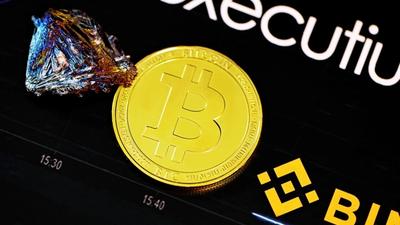
U.S. Moves $288M Seized Crypto to Coinbase Prime — Breaking a Presidential Order
In contrast to the bearish crypto market, gold prices have increased by about 0.9%, reaching $5,070 an ounce, while silver surged over 5%. This rally in precious metals is driven by weaker-than-expected U.S. retail sales data, which has raised concerns about consumer demand and prompted investors to shift their focus towards traditional safe havens. Additionally, the U.S. dollar weakened, and Treasury yields fell as market expectations around interest-rate cuts by the Federal Reserve shifted. On Polymarket, the odds of a Federal Reserve rate cut in March have risen significantly from 7% to around 19% since the start of the month, while on Kalshi, the odds reached 21%.
The derivatives positioning in the Bitcoin market continues to signal high defensive caution, as the one-week 25-delta skew has climbed to 23%. This indicates a cautious approach among traders, even as call dominance remains steady at 55%, suggesting that while some are bottom-fishing, others are wary of further declines. Despite this localized tension, the implied volatility term structure remains unchanged, balancing between backwardation and contango. This suggests a market that is currently managing expensive near-term protection while stabilizing long-term volatility expectations.
On the institutional side, the on-chain lender Spark has introduced new products linking off-chain assets to decentralized finance (DeFi) markets. By managing over $9 billion in stablecoin liquidity, Spark aims to bridge the off-chain and DeFi lending markets. Their new offerings, Spark Prime and Spark Institutional Lending, allow institutional clients to leverage collateral across both centralized and decentralized platforms. Spark Prime enables institutional clients to trade on margin and settle off-exchange, while Spark Institutional Lending is tailored for firms requiring regulated custody. By integrating with custodians like Anchorage Digital, institutions can borrow against assets held off-chain, accessing Spark’s on-chain markets without the need to move capital on-chain themselves.
Despite the current downturn, the Spark native token, SPK, has outperformed the broader market, increasing more than 2% in the past 24 hours. This resilience in SPK suggests that institutional products and services may provide a lifeline amid broader market declines. As the crypto markets face significant pressure, the performance of assets like SPK could indicate a shift in institutional strategies towards more integrated offerings.
Looking ahead, the current market dynamics underscore a critical moment for both crypto assets and traditional financial markets. The juxtaposition of declining crypto prices against rising gold suggests a potential reevaluation of risk assets. Investors are likely to remain cautious, balancing their portfolios amid uncertainty about the future trajectory of interest rates and market liquidity. The implications of these trends could shape strategies for institutions and individual investors alike as they navigate this volatile landscape.